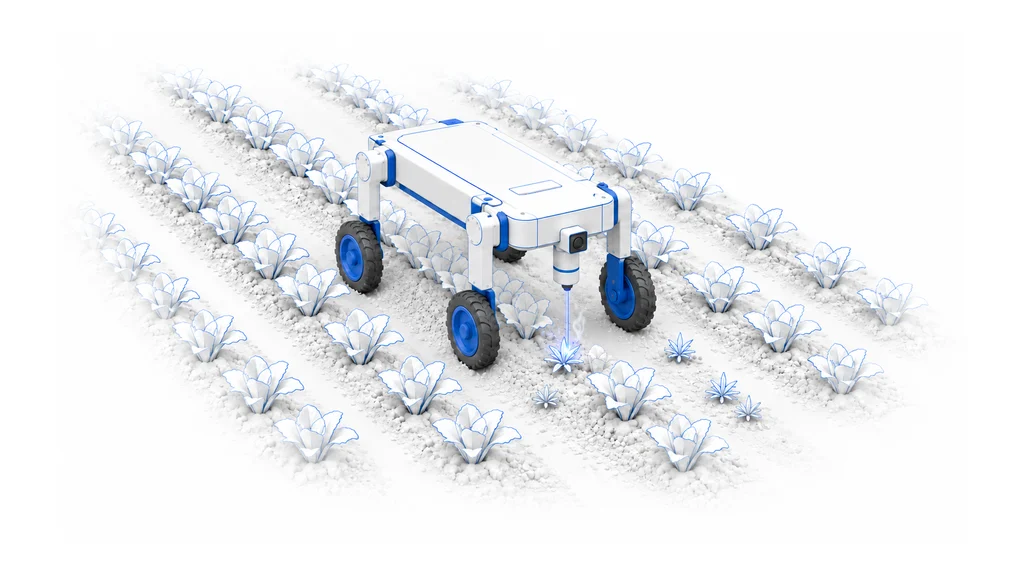
What is weeding?
Weeding removes unwanted plants, called weeds, from a field of growing crop. Weeds compete with the crop for light, water, nutrients and space, and left alone they cut yield and quality. The task runs through the season: an early pass while the crop is small and most vulnerable, and later passes as new weeds come up between the rows and within the row itself. A finished weeding pass leaves the field with the weed population low enough that the crop can grow to its full potential, and it does so without cutting, burying or otherwise harming the crop plants. In many row crops the job also includes thinning, removing some of the crop's own seedlings so the plants left behind have enough room to size up.
Current practice splits roughly between herbicide spraying, which kills weeds chemically but is restricted on organic farms and under growing pressure from weed resistance and tighter regulation, and hand weeding, where crews walk the rows pulling or hoeing weeds by hand, a slow job that depends on finding enough seasonal labor. Many growers combine both: a chemical pass early in the season, then a hand crew to clean up weeds the spray missed or that grow too close to the crop to spray safely.
A finished job, by whichever method, must leave the rows clear enough that the crop is not held back, must not damage a meaningful share of the crop stand, and on organic operations must stay within the certification's limits on chemical inputs.