What is underwater and marine inspection?
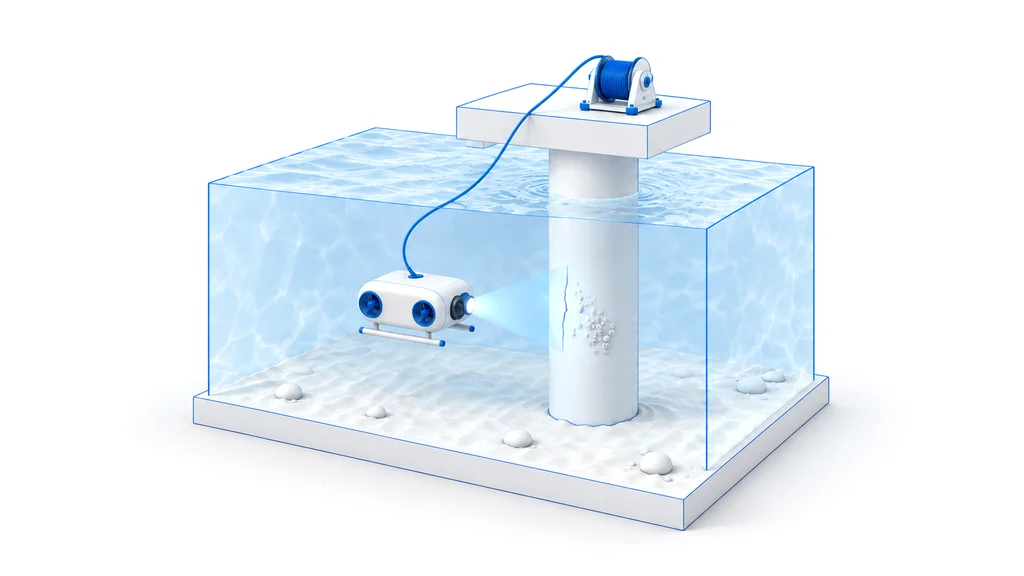
Underwater and marine inspection checks the physical condition of structures that stand in, on, or under water. The objects of work include ship hulls, offshore pipelines and subsea equipment, dams, quay walls, piers, bridge supports, and port structures both above and below the waterline. The job is to look over the whole surface that matters and record what is found: cracks, corrosion, dents, marine growth, gaps in pipeline burial, leaks, or missing protection coatings.
A finished inspection produces a record that an engineer can use to judge the structure's condition and plan repairs. This record usually combines video or still images with sonar data, each tied to a location on the structure so a defect can be found again later. For pipelines, the record often includes a profile of the pipe's shape and burial depth along its length. For ship hulls, it can include the amount and type of buildup removed as well as the hull's remaining condition. The record must cover the structure completely enough that no section is missed, and any defect found must be sized and located well enough to support a repair decision.
Until recently, divers carried out most of this work, swimming along the structure with a camera or hand tools and writing up what they saw. This is slow, limited by how far a diver can see and reach, and risky in strong currents, low visibility, or deep water. Robots now take over much of this direct observation, letting people review the recorded images and sonar data from the surface instead of entering the water themselves.