What is tank inspection?
Tank inspection is the comprehensive structural evaluation of large steel storage tanks used for fuel, chemicals, or drinking water. The primary goal is to measure metal loss due to corrosion across the floor and shell, check the condition of the roof and coatings, and map foundation settlement. These assessments culminate in a formal report from a certified inspector, detailing the tank's operational fitness, required repairs, and the timeline for its next inspection.
The inspection lifecycle is generally divided into two phases:
- Outside (In-Service) Inspection: Conducted while the tank remains operational. An inspector visually examines the shell, foundation, and fittings at least every five years. Ultrasonic readings are taken to measure shell thinning, with faster-corroding tanks requiring more frequent checks.
- Inside (Out-of-Service) Inspection: Focuses on the tank floor—the critical barrier preventing ground contamination. A new tank typically undergoes its first internal inspection within ten years. Subsequent intervals are based on measured corrosion rates, capping at 20 years (or 30 years if a secondary leak barrier is installed underneath).
Internal inspections are highly hazardous. The tank must be completely drained, sludge and residue removed, and vapor spaces cleared. Most storage tanks are classified as permit-required confined spaces. Before a crew can enter, the air must be strictly tested to mitigate risks of fire, explosion, toxic vapors, asphyxiation, entrapment, and falls.
Who relies on tank inspection?
- Refineries and Chemical Plants: These facilities maintain massive inventories of crude oil, feedstocks, and finished products. Emptying a tank for an internal inspection temporarily removes critical storage capacity from the production process, making efficiency paramount.
- Fuel Terminals: Operating as transit hubs, terminals store product arriving by ship, barge, or pipeline. For these businesses, an empty tank undergoing maintenance represents direct lost revenue.
- Water Utilities: Municipalities must inspect treated drinking water tanks for structural integrity, coating degradation, and floor sediment. Draining a tank directly impacts the local water supply. Additionally, all inspection equipment entering the tank must be strictly disinfected to meet potable water standards.
- Industrial and Commercial Sites: Power plants, factories, and mines often keep large diesel reserves for backup generators. Under US environmental regulations, any site with aboveground oil storage exceeding 1,320 gallons is subject to spill prevention rules. While facility staff can perform routine external checks, specialists are required for formal integrity testing.
- Tank Inspection Firms: These specialized contractors provide the certified personnel and advanced equipment. In many jurisdictions, regulations mandate that an independent professional firm or registered engineer inspect water tanks holding 10,000 gallons or more.
How tank inspection robots work
Robotic systems are revolutionizing tank maintenance by capturing high-density data while reducing the need for human entry into hazardous confined spaces.
Submersible Floor Scanners
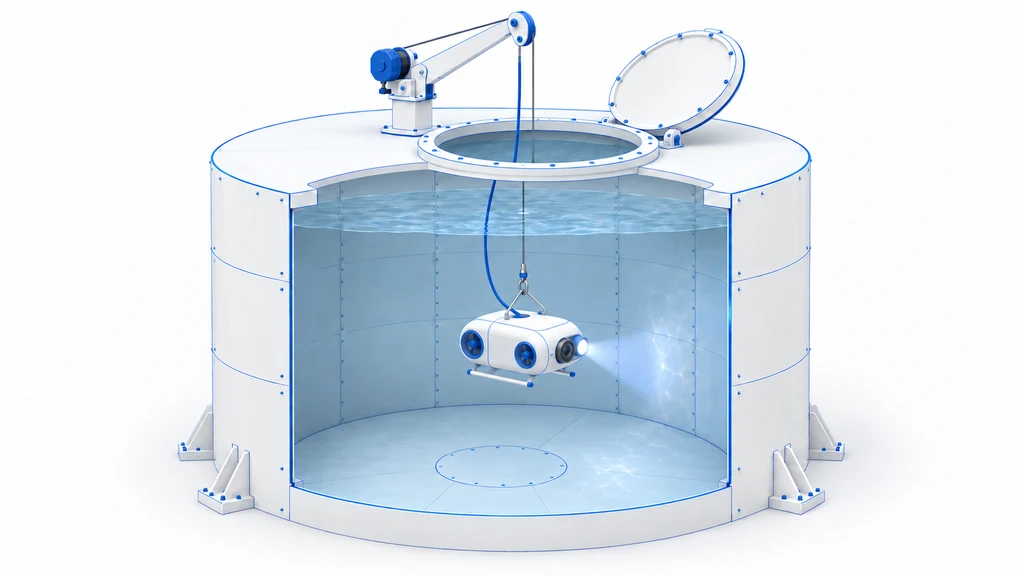
Inside a working tank, tethered submersibles can measure floor and shell thickness without taking the asset offline. Crews lower the robot through a standard 24-inch roof hatch or side manway. Utilizing phased-array ultrasonic testing (PAUT), the robot captures roughly 10,000 thickness readings per square foot to build a high-resolution corrosion map. It also measures bottom settlement, using onboard cameras for navigation (though cloudy products can limit visibility).
Wall-Crawlers for Vapor Spaces
For floating-roof tanks that remain in service, wall-crawling robots inspect the upper vapor space. Driven by operators outside the tank, the crawler magnetically adheres to the steel shell, driving up to the roof seal. A robotic arm lifts the seal while integrated cameras, gas/heat sensors, and 3D scanners record the condition behind it. A typical deployment takes only two to three hours.
Aerial Drones (UAVs): To measure external shell thickness without scaffolding, specialized drones fly up to 330 feet above ground (operating in winds up to 14 mph). An articulating arm presses an ultrasonic probe against the steel, automatically applying couplant to take over 100 readings per hour. Swappable end-effectors can also measure coating thickness.