What is mowing?
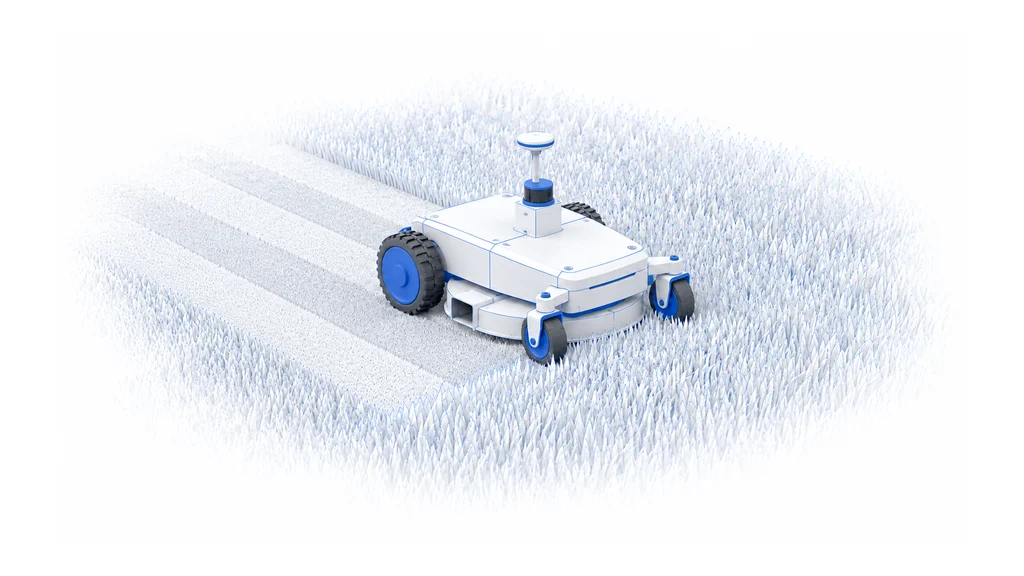
Mowing cuts standing grass or other low vegetation down to a target height and keeps it there through repeated passes over a growing season. A finished pass must cover the whole area without missed strips or scalped patches, leave the cut height even across the surface, and avoid damage to sprinkler heads, trees, signs, water features, and other fixed objects. On sloped or uneven ground the cut must stay level despite the terrain, and on working farmland the mower must not disturb crops, vines, or young trees growing nearby.
Most mowing today uses push mowers, riding mowers, or tractors pulling a cutting deck, all driven by a person who steers around obstacles and adjusts speed for rough patches or wet grass. Large properties such as golf courses, sports fields, and industrial parks are divided into zones or passes that a crew works through in sequence, often daily or several times a week during the growing season. Clippings are either left to break down on the surface, collected, or mulched back into the turf, depending on what the site requires.
A completed mowing job leaves the surface at a consistent height suited to its use, whether that is a closely cut fairway, a trimmed vineyard row, or an open field kept short for fire safety or appearance. The area should be clear of large clumps of clippings, and any obstacles on the site should remain undamaged.