What is line marking?
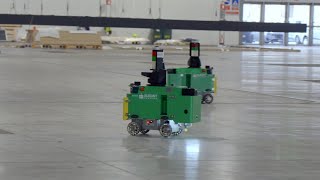
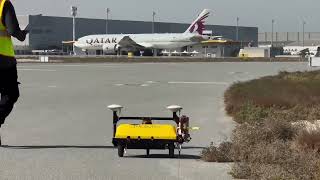
Line marking is the job of painting or marking straight lines, symbols, and layout points on a surface so the marks guide later work or activity. The surface can be a road, a parking lot, an airport apron, a sports field, or the floor of a building under construction. The work starts from a plan: a set of coordinates, a CAD or BIM drawing, or a standard field layout, and reproduces it at full scale on the ground.
A finished job must place each line or point within the tolerance the plan calls for. Construction layout often needs accuracy within a fraction of an inch, since other trades build directly from the marks. Traffic and field lines allow more room, often within a few inches, but must still match the required width, spacing, and straightness. Marks must also last: paint has to survive weather, vehicle traffic, or foot and equipment use until the next repaint, and layout points, whether painted dots, stakes, or nails, must stay clear enough for another crew to find and use them without re-measuring.
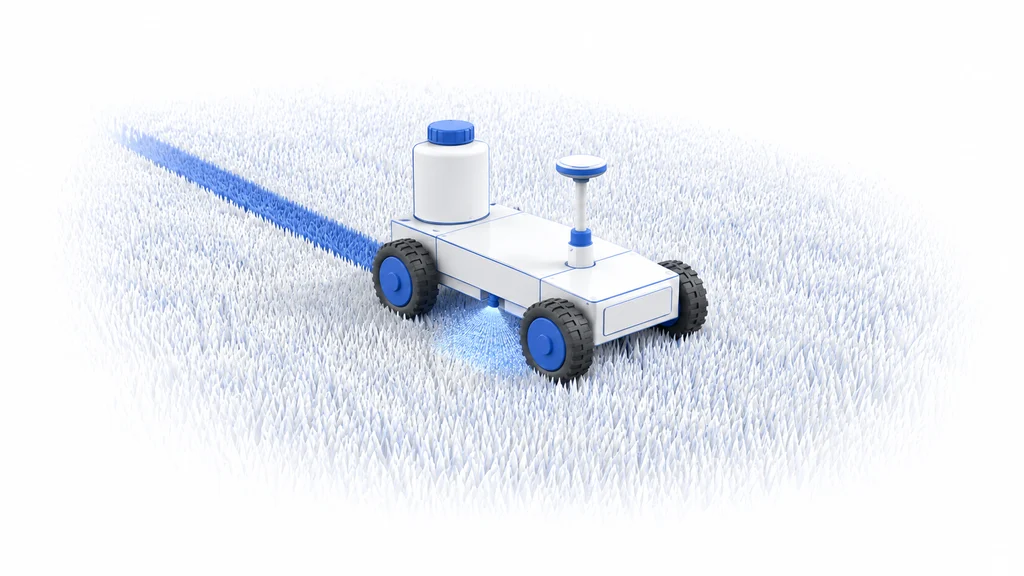
Current practice away from robots relies on chalk lines, tape measures, and hand-held paint rollers or sprayers for construction floors, and on wheeled striping machines guided by hand or by GPS for roads and sports fields. Plans are increasingly digital, drawn in CAD or BIM software rather than on paper, which lets coordinates be loaded directly into marking equipment instead of being measured out point by point on site.