What is inspection?
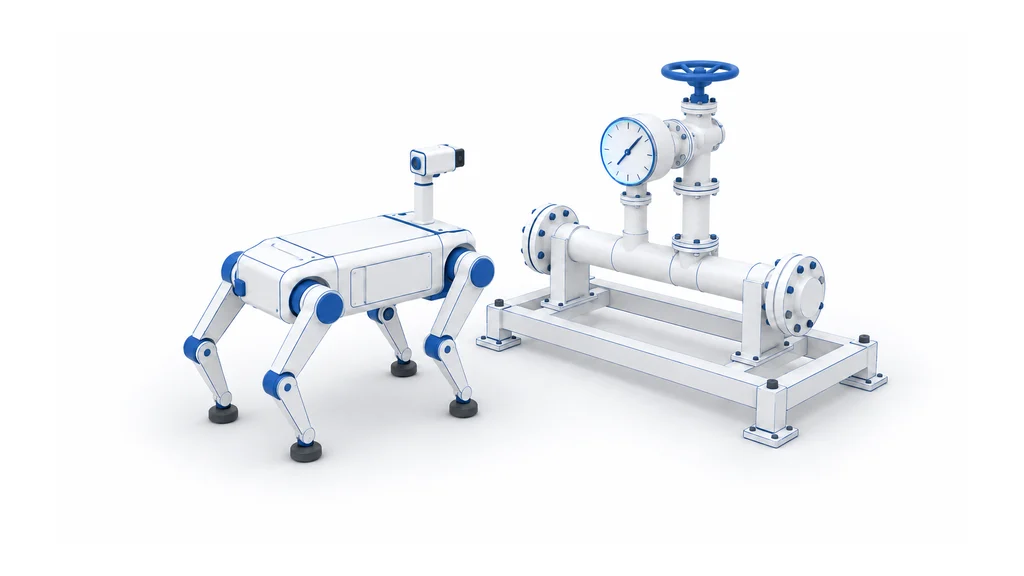
Inspection means checking equipment, buildings, and infrastructure for damage, wear, leaks, corrosion, or other faults, so that owners can fix small problems before they become failures. The object of the work can be a storage tank, a pipeline, a transmission tower, a cell tower, a factory machine, a bridge, a wall, or the ground beneath a construction site.
A finished inspection produces a record that an engineer or safety officer can act on: photos or video tied to a location, sensor readings such as gas levels, wall thickness, or temperature, and a list of findings graded by how serious they are, from a minor scratch to a leak that needs immediate shutdown. The record has to match whatever limit or standard applies to the asset, such as a minimum coating thickness or a maximum gas concentration, so staff can decide whether to repair, monitor, or stop work.
Today, much of this work is done by people walking a fixed route with a handheld gauge or camera, climbing a tower or tank on a rope or lift, or shutting down a line or machine so someone can look inside it safely. Specialists carry out tests such as ground-penetrating radar or magnetic particle testing to find problems hidden below a surface. Inspection has to happen on a set schedule or after an event such as a storm or a spill, and it must reach every point on the asset, including places that are high up, underground, confined, or otherwise hard for a person to get to safely.