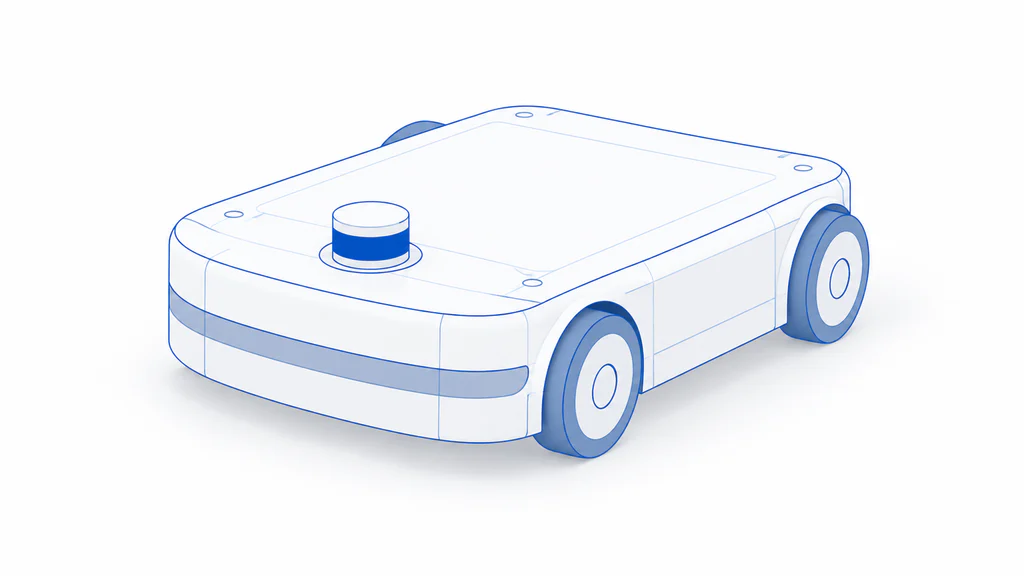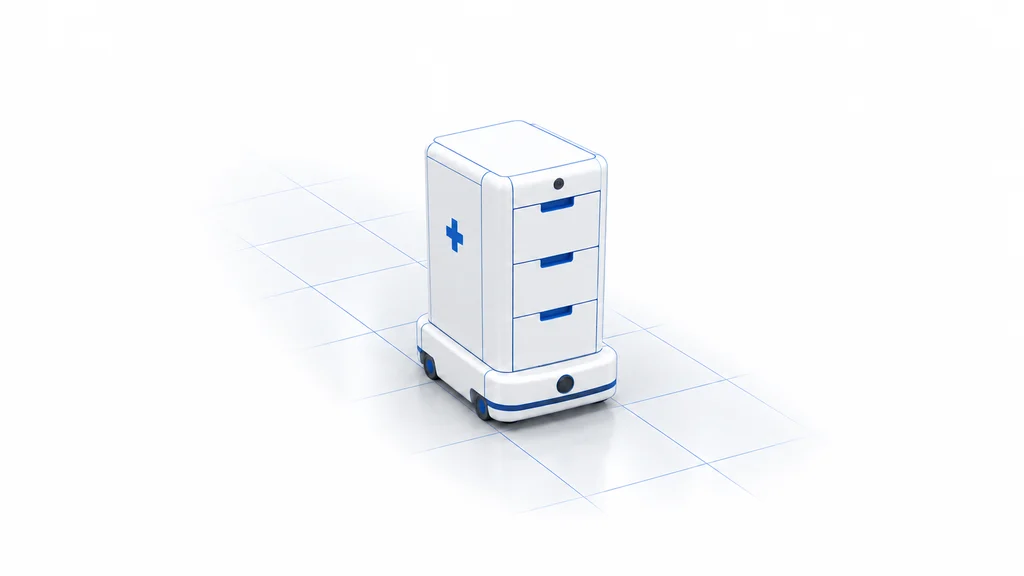
What is hospital delivery?
Hospital delivery is the movement of goods between the places that produce or store them and the places that use them: the kitchen, pharmacy, laboratory, linen store, supply room and the patient units. The goods include meal trays, medication, lab specimens, clean linen, surgical supplies, trash and equipment such as telemetry units.
A finished delivery places the right item in the right location, in the hands of the right person, within the time the item needs: a hot meal while it is still warm, a blood sample before it degrades, a medication at the scheduled dose time. Each delivery usually ends with a staff member confirming receipt, and for items such as medication or lab specimens the record must show an unbroken chain of custody from pickup to drop-off.
Before robots took on this work, porters, nursing assistants or nurses carried these loads by hand or on manual carts, often leaving the patient floor to fetch or return an item. Current practice in many hospitals keeps this manual method for some runs while assigning routine, repeated routes, such as meals from the kitchen or specimens to the lab, to automated delivery.