What is food packaging?
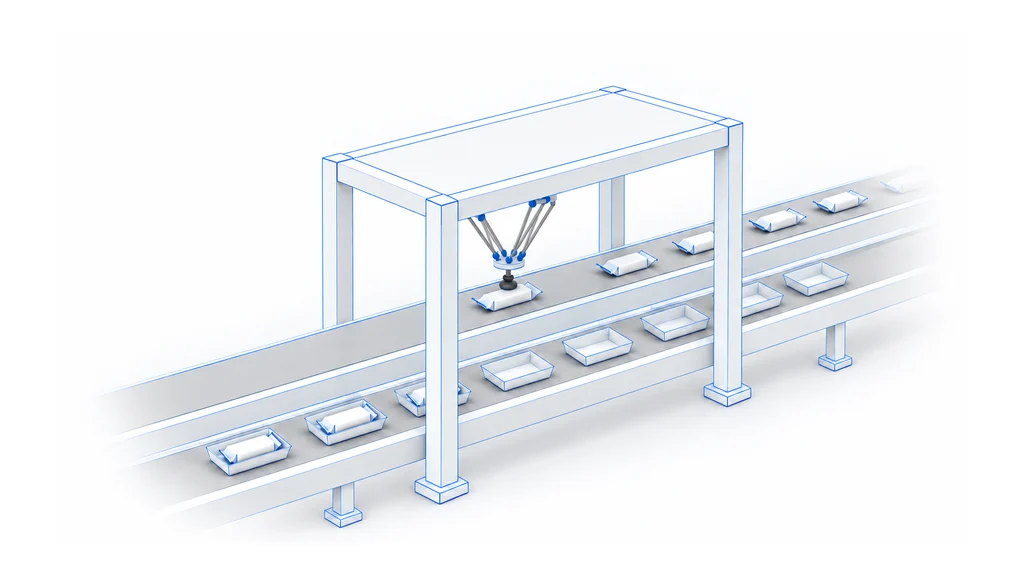
Food packaging is the work of taking finished food products, whether bulk items, individually wrapped packs, bottles, cans, or loose pieces, and placing them into the containers that carry them to stores or warehouses. These containers include corrugated cases, folding cartons, trays, bowls, and clamshells. The job starts after the product leaves the production or wrapping line and ends with a closed, sealed container ready to be stacked on a pallet.
A finished unit must hold the correct number or weight of product, arranged in the pattern the case or carton calls for, with no damaged or missing items. Cartons and cases must be formed or erected to the right size before loading, then sealed so the contents stay clean and secure during shipping. For portioned items such as produce or deli cuts, the filled weight must match the number printed on the label within the plant's tolerance.
Workers have traditionally done this job by hand: picking items off a moving line and placing them in boxes one at a time, or feeding tray formers and case erectors manually. This pace limits how fast a packaging line can run and exposes workers to repetitive strain from constant reaching and lifting. Plants that need higher speed, consistent pack patterns, or washdown-safe equipment for wet, sanitary rooms look to automate this step, while the end requirement stays the same: a correctly filled, sealed container that meets the receiver's weight, count, and size specification.