What is palletizing and depalletizing?
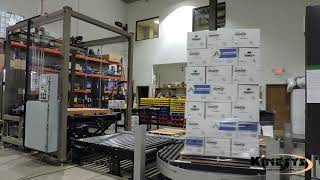
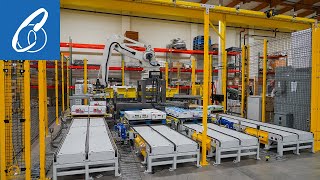
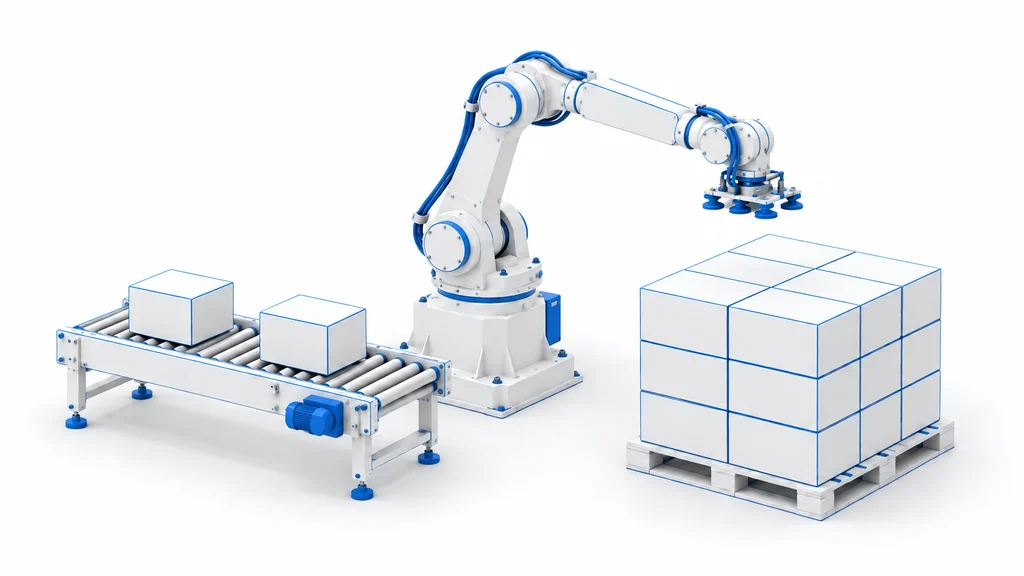
Palletizing is stacking goods on a pallet to make one load that can be stored, moved by forklift, or shipped. The goods are usually cases, bags, bundles, trays, or parcels. Depalletizing is the reverse: taking goods off a pallet, layer by layer or item by item, and placing them on a conveyor or work surface for the next step.
A finished palletizing job meets the rules of whoever receives the load. Typical rules include:
- The load stays inside the pallet edges and does not lean.
- The stack is under the receiver's height and weight limit.
- Each layer follows a set pattern, often interlocking so the layers hold each other.
- Items are counted correctly, undamaged, and turned so labels can be read or scanned.
- The load is stable enough to wrap, strap, or move without shifting.
A finished depalletizing job means every item is off the pallet, undamaged, in the right order or position on the conveyor, and the empty pallet is ready to be removed or reused. Pallets that mix box sizes or have several levels need each item handled in turn.
In current practice, workers stack and unstack by hand, or load packages onto fixed machines at the end of a production line. Pallet patterns are set in advance for each product. Work happens at factory lines, warehouse docks, and in cold rooms and freezers.