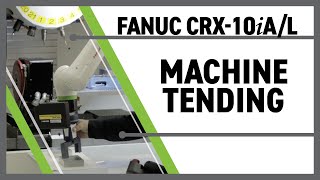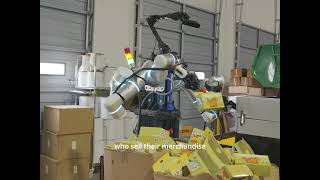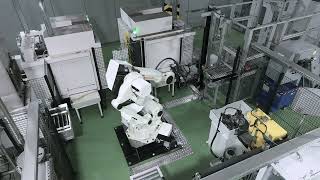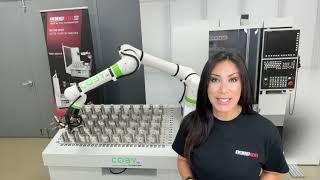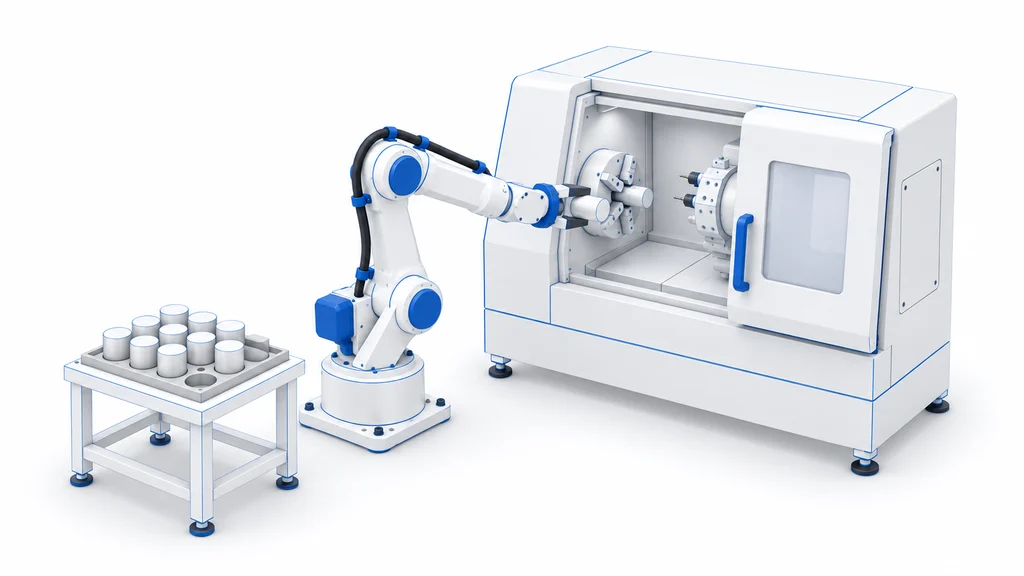
What is machine tending?
Machine tending is the work of keeping a production machine supplied with material and cleared of finished parts so it can run one cycle after another. Whoever tends the machine opens its work area, takes out the part that was just finished, puts a new blank or raw piece in the correct position, and closes or starts the next cycle. The machine itself, whether a lathe, mill, stamping press, molding machine, or gauging station, does the cutting, forming, or testing; tending only covers the loading and unloading around it.
A finished cycle must leave the new part seated and clamped correctly so the machine can complete its operation without damage or a stopped run, and the part removed must come out undamaged, in the right orientation, and placed where the next step needs it, such as a tray, a pallet, a conveyor, or a secondary machine. Where a gauging or inspection step is part of the cycle, the part must also pass through that check before it is accepted. Over a shift, a tending record should show parts loaded and unloaded cycle by cycle without the machine standing idle while it waits for material.
Today, this work is usually done by an operator standing at the machine: opening a door or chuck, pulling the finished part, checking it, and loading the next blank by hand. Because a person has to be present for each cycle, many shops run their machines for only one or two shifts a day, even though the machine itself could keep cutting through the night if it had material and somewhere to put the finished parts.